LAOS December 2025
You can pronounce Laos with or without an S – it doesn’t matter. After a brutal recent history their strapline is Peace, Independence, Democracy, Unity, Prosperity. It bears the unfortunate title of the most bombed country on earth, During the Vietnamese War (1955-75), a CIA-supported military strategy conducted a secret war here in what was a neutral country. The US flew over 500,000 missions, dropping over 2 million tonnes of ordnance between 1964 and 1973, to stop the communists using the Ho Chi Minh Trail. 80 million of the 260 million cluster bombs failed to explode on impact and still cause problems with around 300 people killed or injured every year.
We arrive in Vientiane, which combines influences from Laos, Thailand and France. Here the Mekong River forms a border with Thailand, while the French colonized the place a long time ago. We check in to the Salana Boutique Hotel for two nights. After orientation and a gentle stroll down to the night market by the river, which is full of the usual fake designer dross, the next day we are ready to explore. Our guide takes us to a range of temples where we learn a lot about Buddhism and Hinduism, the Si Muang temple, Wat Si Saket, the Patuxai monument which is a rough copy of the Arc de Triomphe, and the very gold That Luang Stupa, but it is a fraction of the size of efforts we have seen in Myanmar such as Shwedagon. Things are pretty bustling, but perhaps somewhat less since the introduction of electric tuk-tuks from South Korea. As with so many places, there is a stark contrast between the rich and the poor, with gold houses and posh cars on one hand, and small kids collecting plastic bottles on the other.
The following day we head to the new strain station to head north to Luang Prabang. The funding of this by the Chinese has caused a range of economic problems. Clean and efficient as one would expect, it takes us through sprawling agricultural land that is eventually backed by dramatic karst scenery, with prominent limestone sugar loaves punctuating the view as far as the eye can see. Its calm beauty is only partially disturbed by the guy snoring incessantly in the seat behind us.
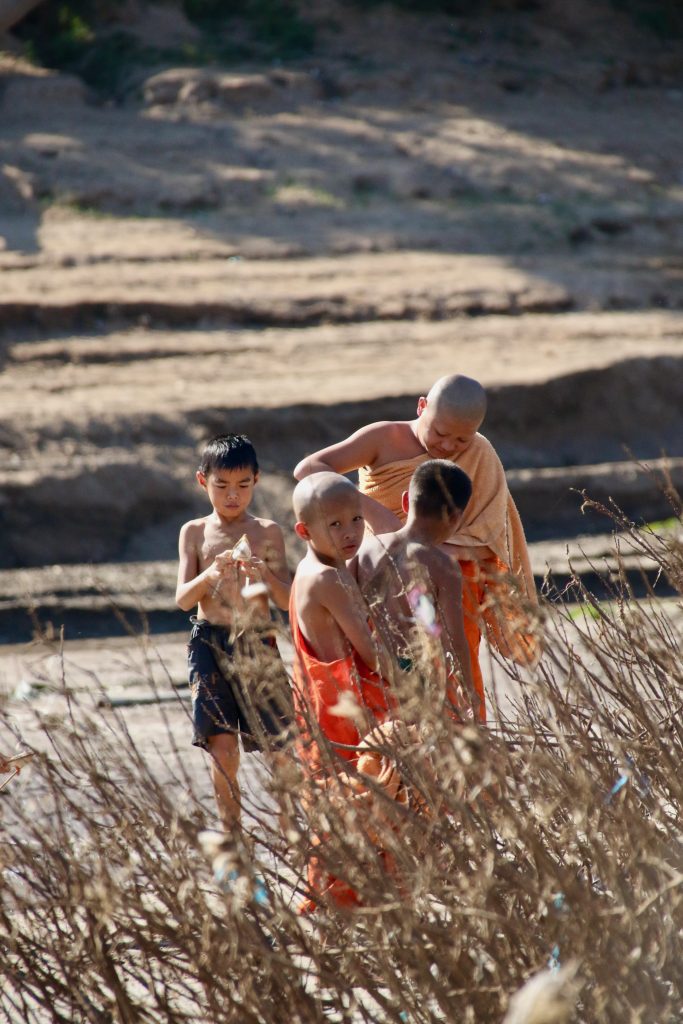
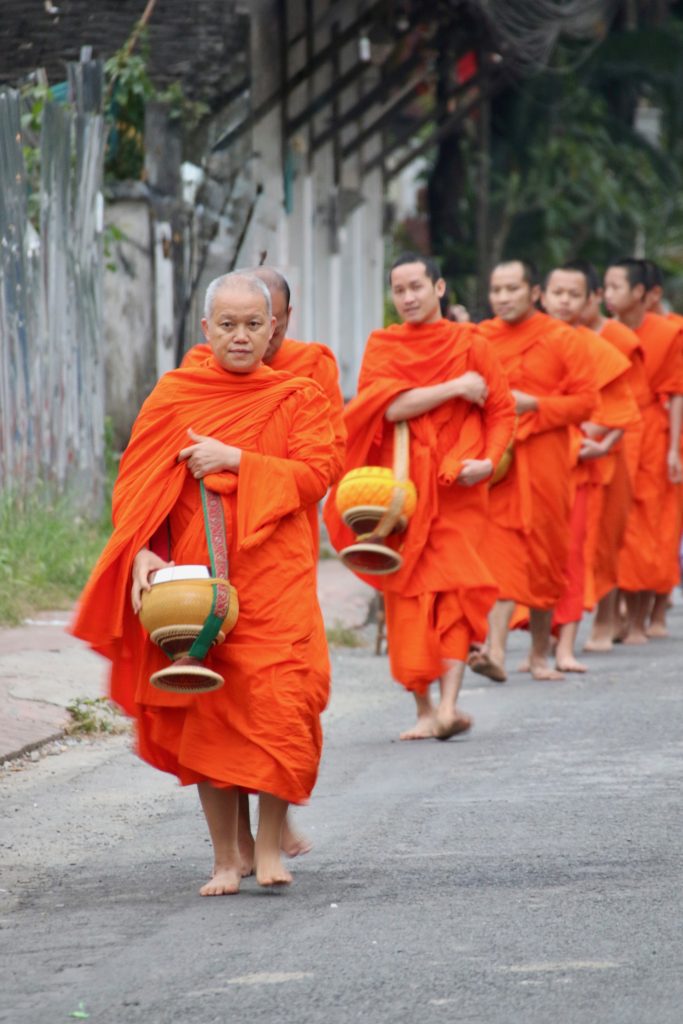
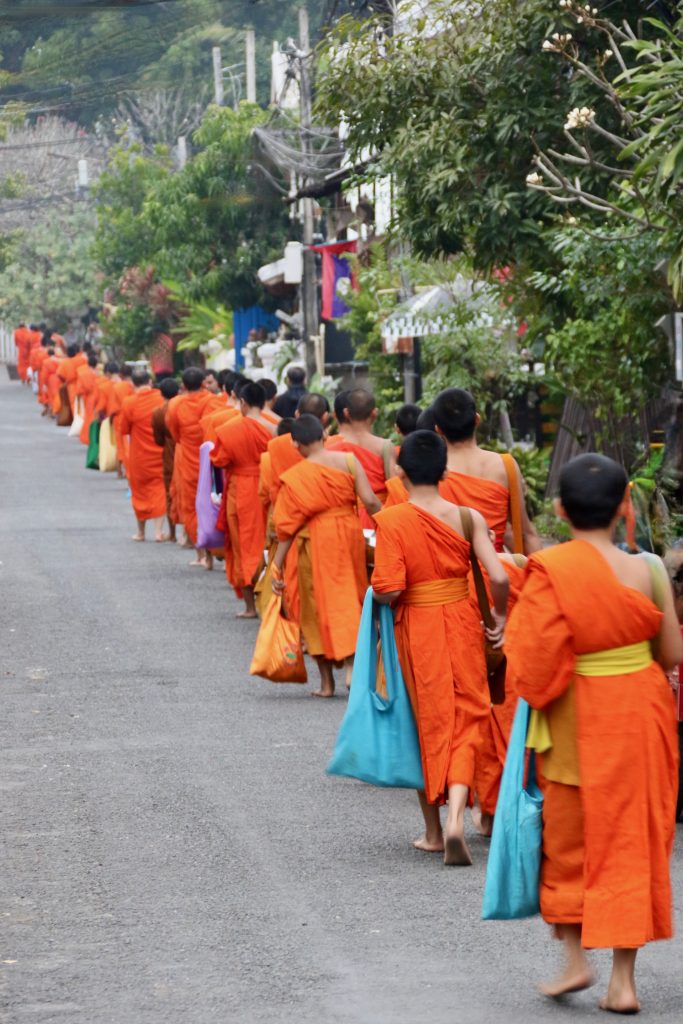
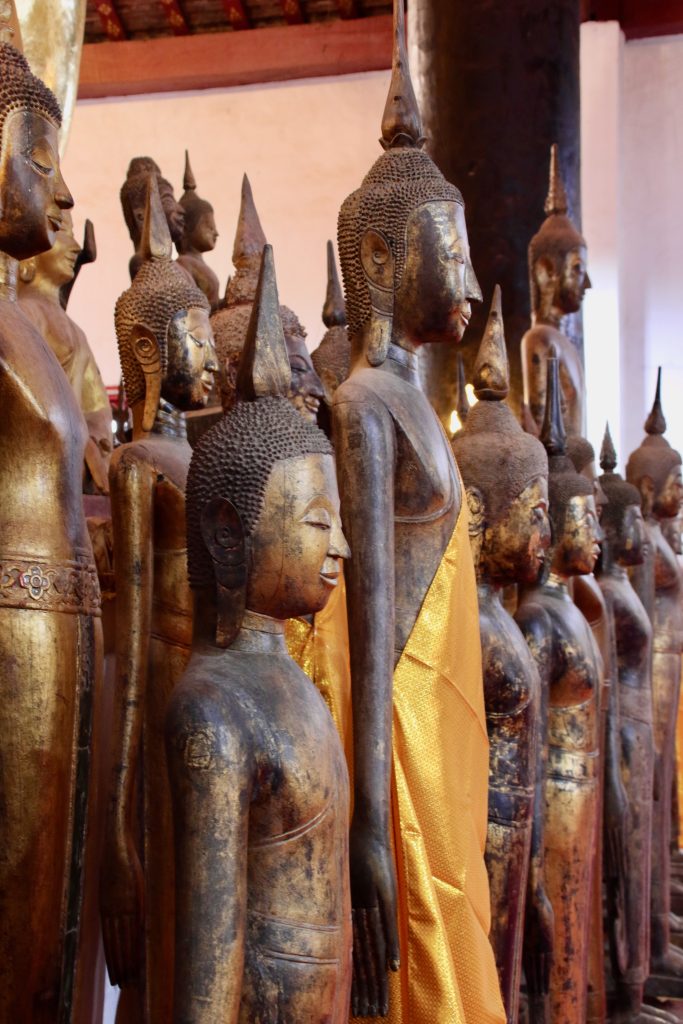
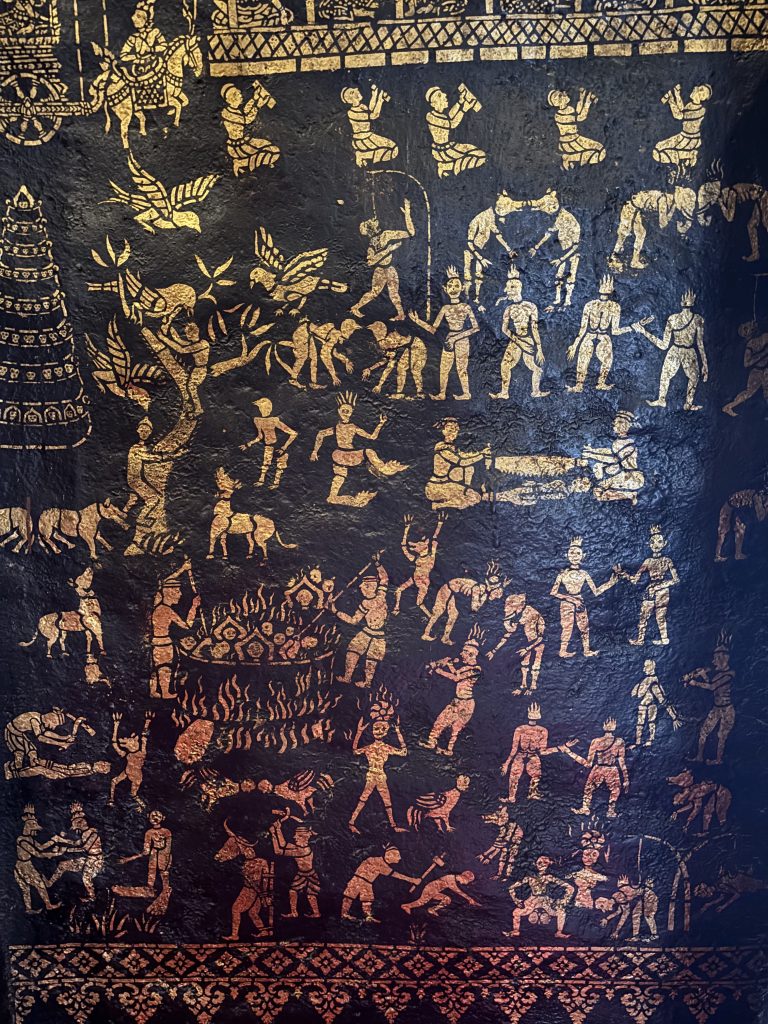
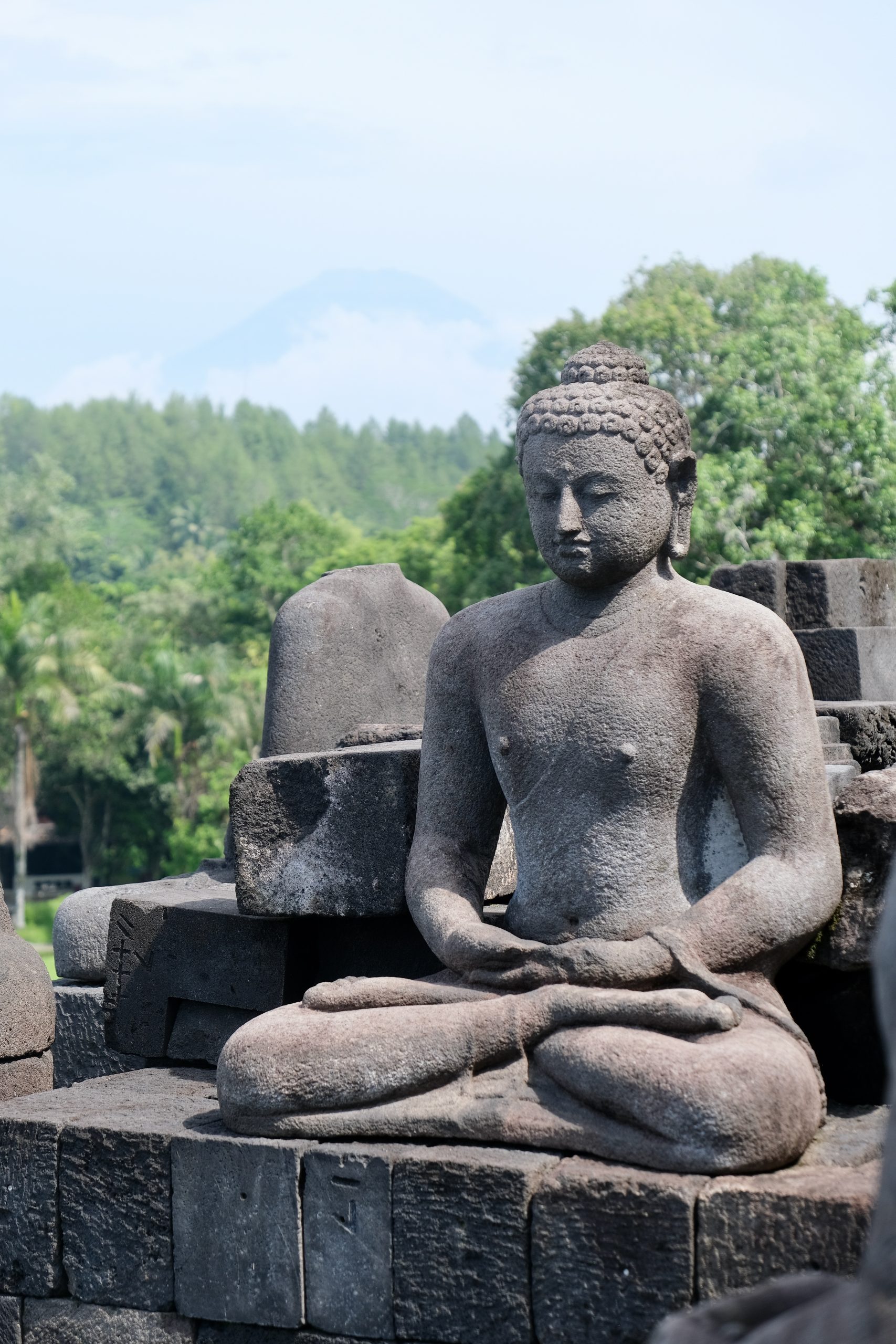
Luang Prabang is on the confluence of the Mekong (pronounced Maykong) and Nam Kham rivers, and we check in to the Maison Dalabua which is delightfully organized around three ancient lily ponds. Sarah is up very early to give alms to the monks which turns out to be double-edged. It’s something of a fixed ritual with many Chinese jostling for position, some locals selling alms packages of rice and snacks which are accepted in a somewhat robotic style by scores of monks who do this every morning. Not as much of a spiritual moment as hoped for. We meet up and visit Wat Xiengthong early before it is overrun. Fine mosaics tell parables about the morals of buddhism, and a little known graphic maps out in considerable detail what might happen to you if you fail to go to heaven. Examples include being suspended from a bar by your tongue, being quartered in various ways, and having something unspeakable done to your testicles. Meanwhile the Wat Visoun with its water melon stupa is peaceful and packed with hundreds of buddha statues which can be properly enjoyed because there is no one else there. The Royal Palace Museum by contrast is packed and not very exciting. We finish off a busy morning with a visit to a textile village called Ban Xangkhong where we can see at first hand silk spinning and weaving, and how to make paper from mulberry bark.
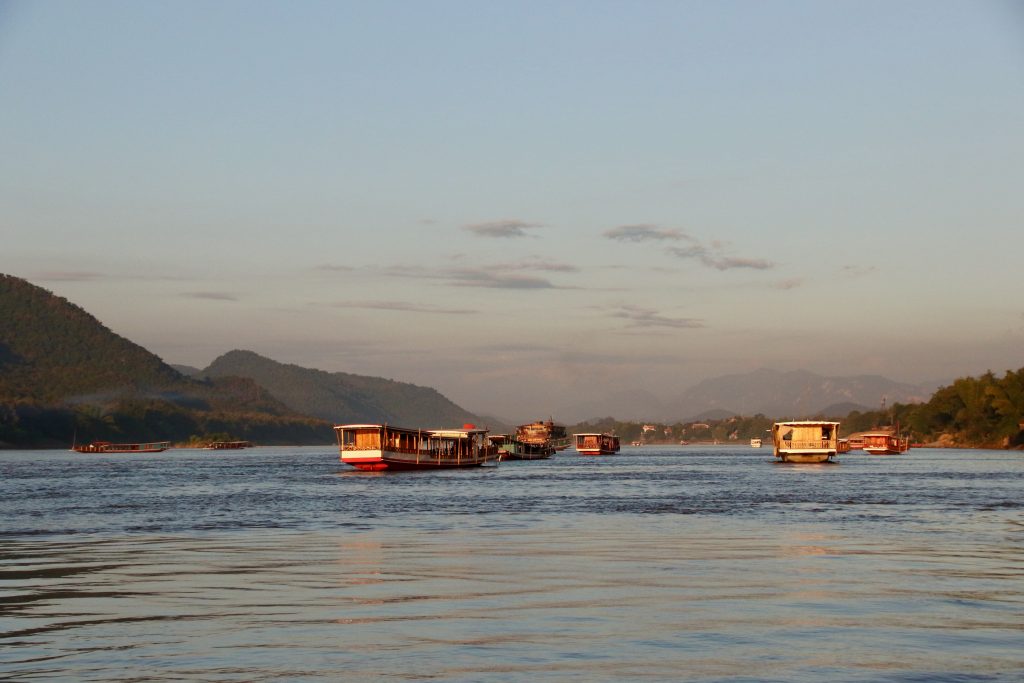
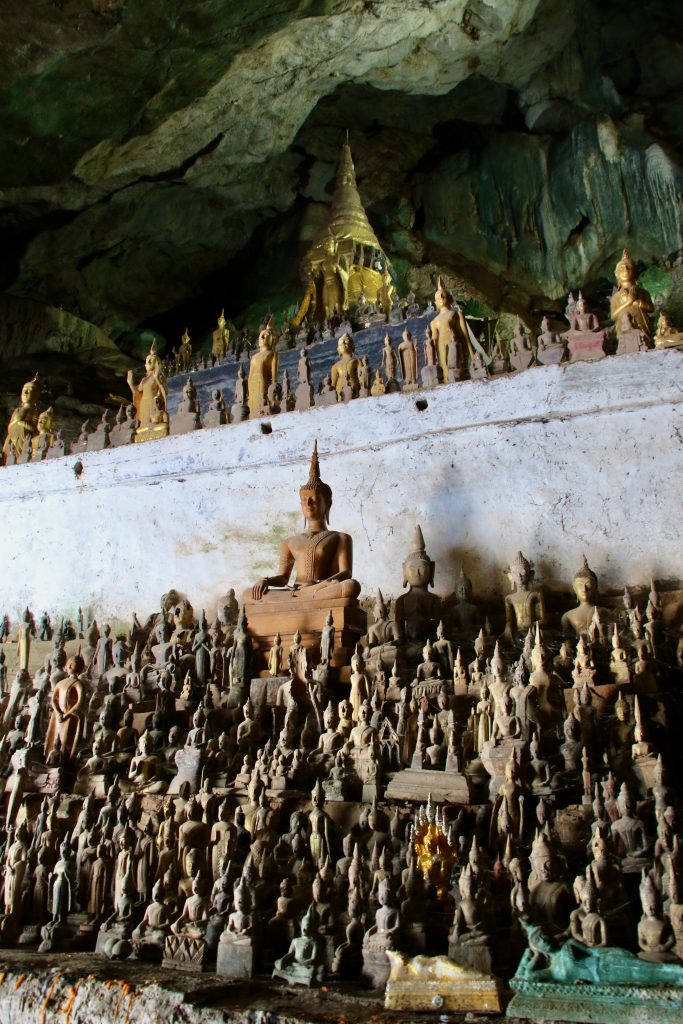
The next day we take a lovely cruise up the Mekong to visit the Pak Ou caves which are crammed with over 6,000 buddhas. It’s a lovely, pretty much undisturbed trip, interrupted only by the site of a planned new Chinese ‘Smart City’, complete with elephant amusement island that will lead to the eviction of the monks currently on it, and the appalling throng of karaoke vessels singly badly and loudly as the sun sets on our return. Next stop, Pakse.
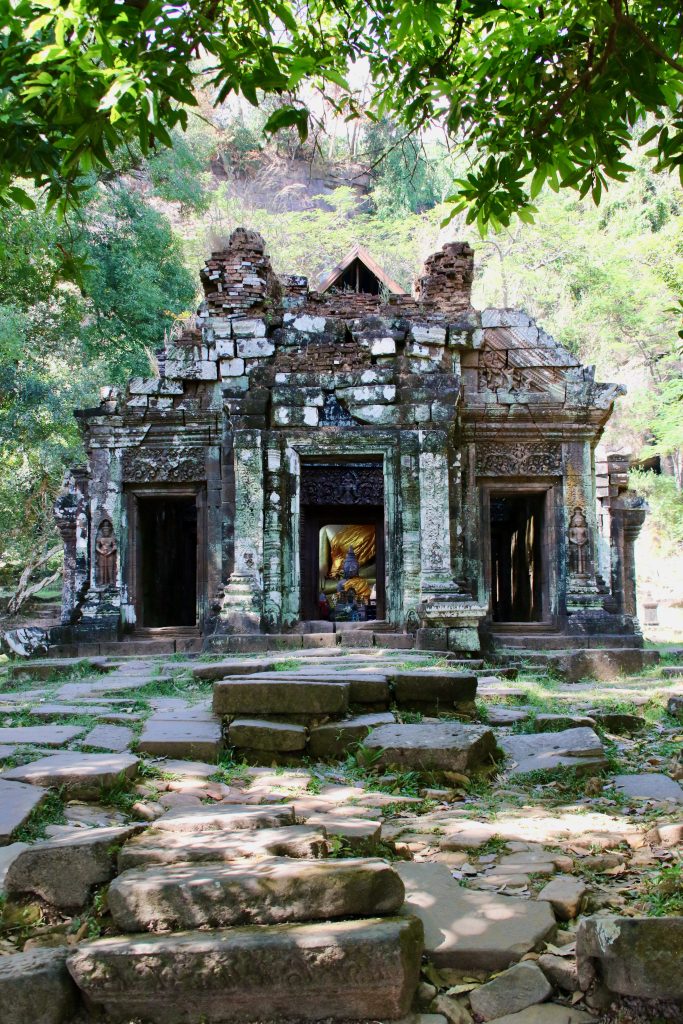
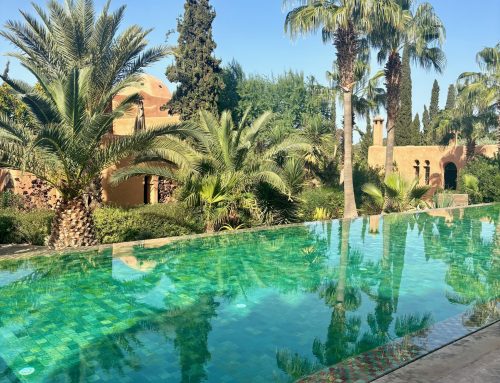
It’s a pretty straightforward flight down to South Laos, landing at Pakse and driving to Champasak, sometimes described as the gateway to Wat Phou and the so-called 4,000 islands. This is where the river slows down and widens enormously. Neither town is much to write home about, but La Folie Lodge on Don Deng Island certainly is. At this point the river is 1.7km wide so it takes 20 minutes to cross and because it is the dry season the shoreline is a beautiful sandy beach with nothing on it apart from local grazing buffalo. The following day we visit Wat Phou, which turns out to be significantly more interesting than the guidebooks suggest. The basic temple structures at the base of the mountain are just a fraction of the complex, which includes stylized lakes, enormous stone walkways to facilitate what used to be an annual ceremony, stairways ascending to a water source that trickles through the limestone mountain, temples, a sacrifice area, and much more.
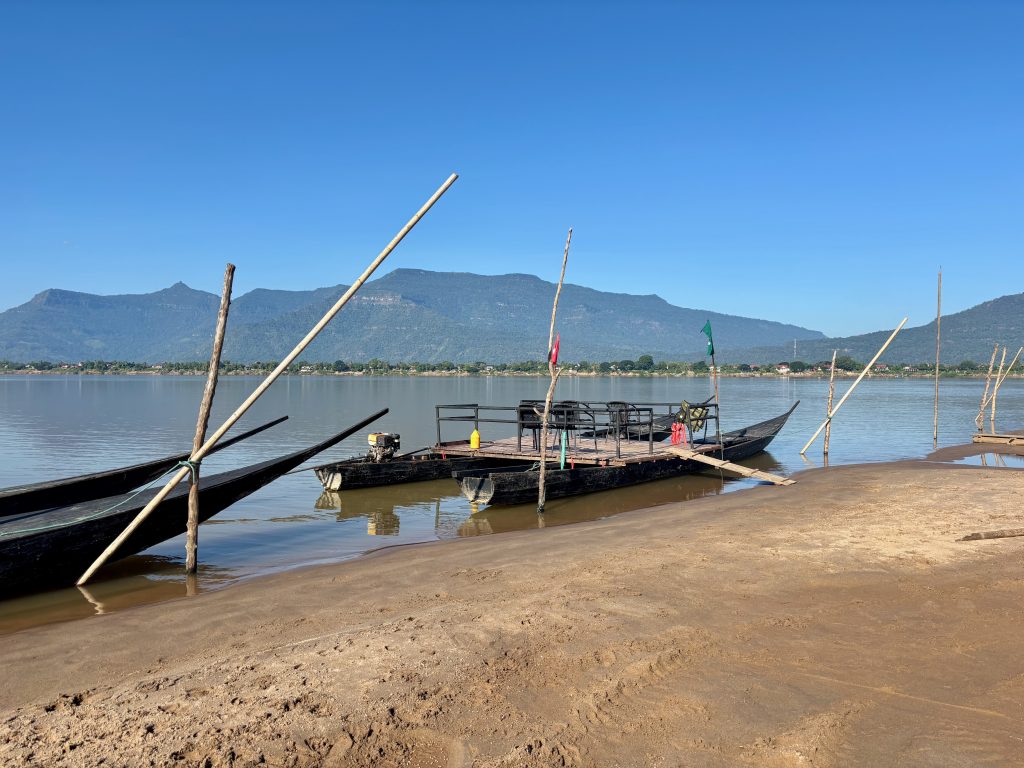
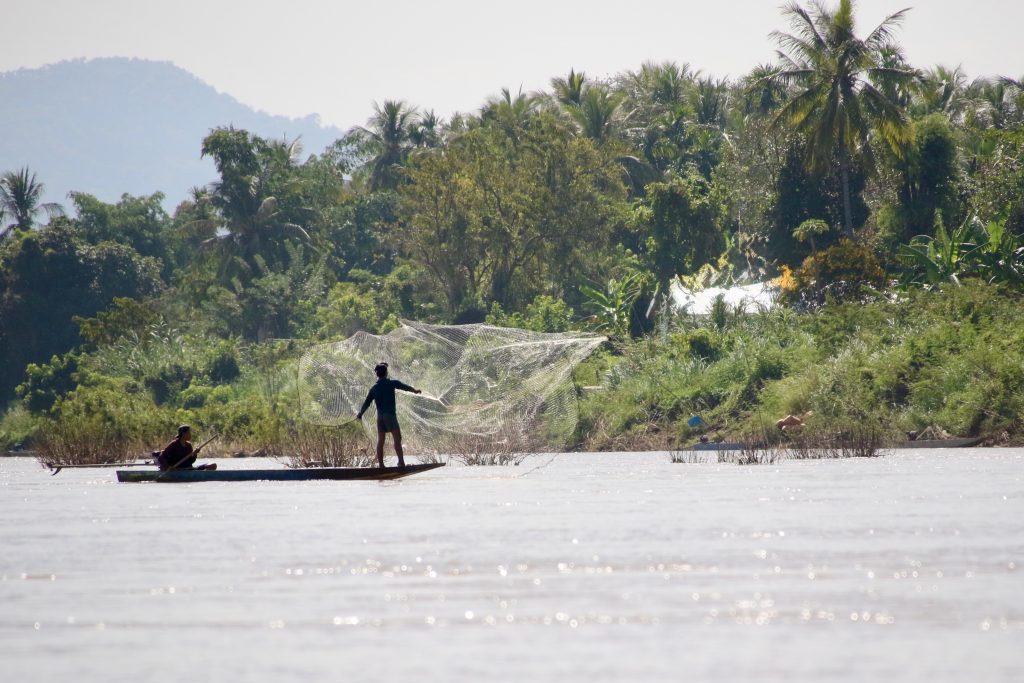
The next day we are off again, first by boat to the mainland, followed by a drive to Ban Hatsaikhone, where we board another boat for a hour to arrive on the island of Don Khone, where we check in to the Sengahloune Resort. It’s a bit more functional than we have been used to so far, but it works as a base for the Liphi Waterfalls. They can be viewed from dry land or by traversing a series of hanging bridges. Once again the Chinese have bought the land and thrown out all the locals who used to fish here and run the (now empty) restaurants. The relic of the first locomotive in Laos introduces an interesting story. The French were trying to navigate up the Mekong and came across this part of it. They tried every route upstream and all six were blocked by waterfalls. So they built a railway to transport their boat and carried on from there. Back next to the hotel, the bridge that carried the railway provides a perfect vantage point for people to watch the sunset over the water.
The next day is our last in Laos before crossing into Cambodia. World news reveals a flare-up in the long-standing feud between Cambodia and Thailand over a temple called Preah Vihear. It’s been going on for over 100 years and since June they have been bombing and firing rockets at each other. They have hated each other for centuries – the Khmer of what is now Cambodia was a huge nation that was successively invaded and Siam (Thailand) was a major expansionist culprit.
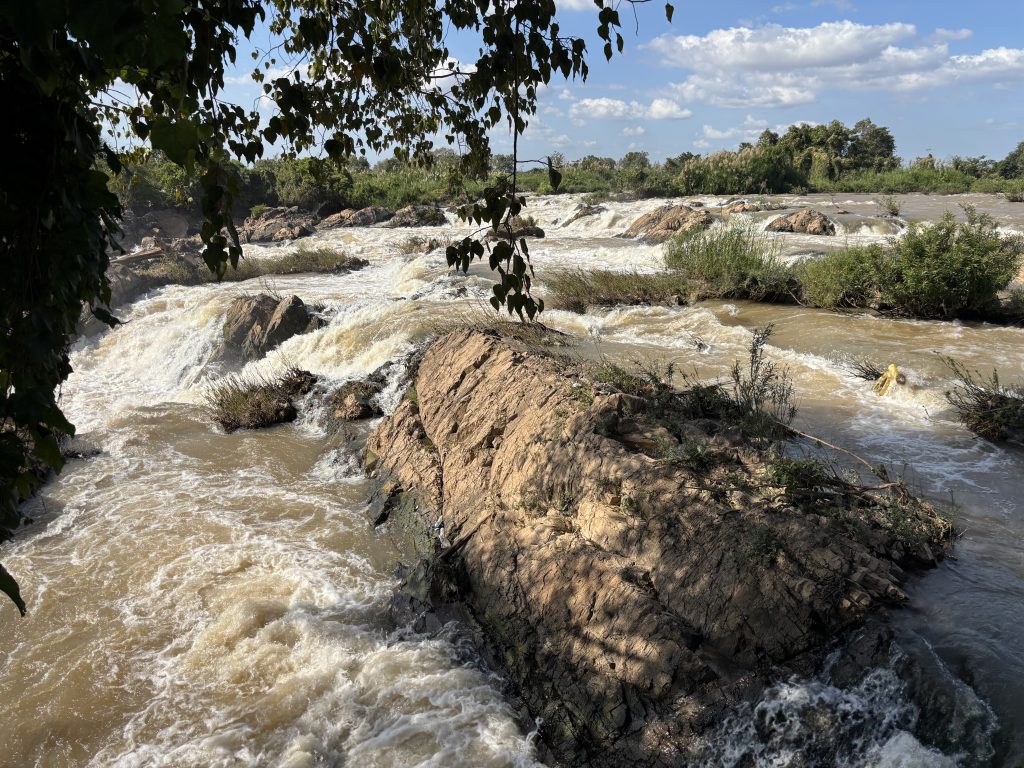
Before crossing the border we have time to view another Chinese atrocity – the effect of damming and diverting water from the Mekong. The Khone Phapheng Falls are now a pale shadow of previous times – dry in large patches. As usual the Chinese have bought the land and thrown out the local fishermen and restaurant owners. Border formalities are simple, and we drive on to Kratie.
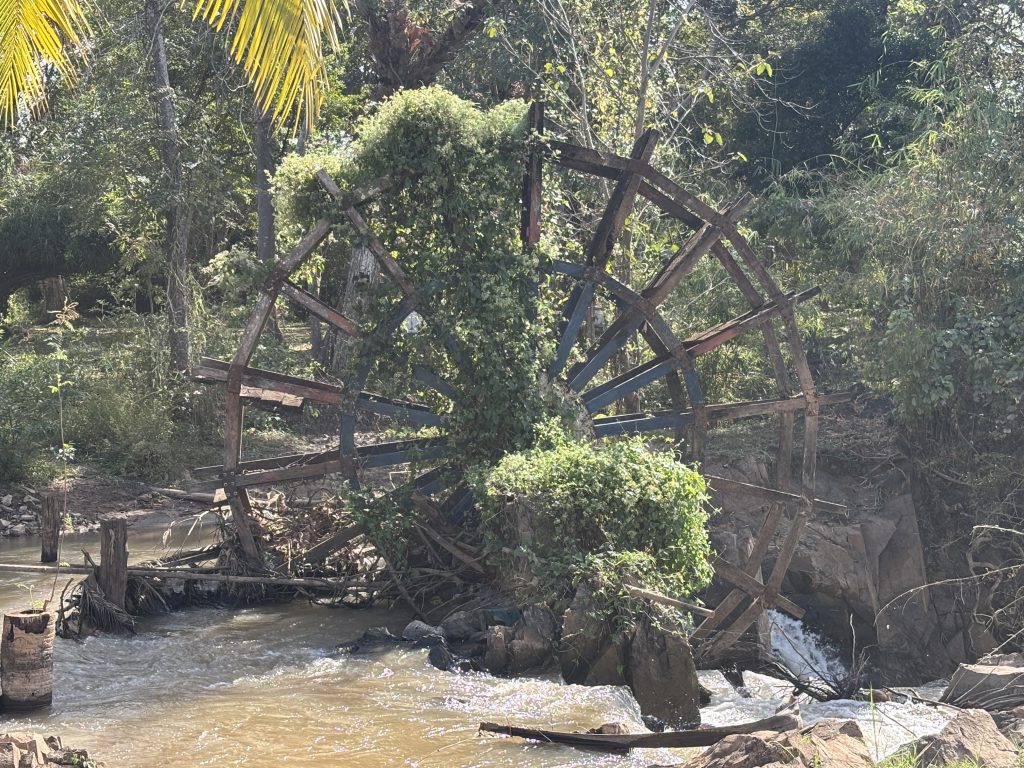
Closing remarks on Laos. Where to start? The mainly buddhist stance here leads to a passive ‘middle way’ for the locals, which is lovely. However, if this philosophy is taken on to the world stage, it makes the country a pushover. Claiming to be both communist and a democracy is a contradiction that is hard to reconcile. The country is so in debt to China that the way back seems impossible. There is effectively to beneficial trickle down to the people on the ground. Are the government naïve or corrupt? It’s hard to say. Meanwhile some aspects of “pure local life” are disappointingly choreographed for a tourist audience, such as the giving of alms to monks. This can be seen in a far more authentic way in Cambodia. Notwithstanding all this, Laos is a wonderful pace to visit and so, removing all political considerations, it is highly recommended. A robust 9 out of 10. Political factors included, and based on the difficult standard of living for the locals, that score would reduce to a 5.

Leave A Comment