
CAMBODIA December 2025
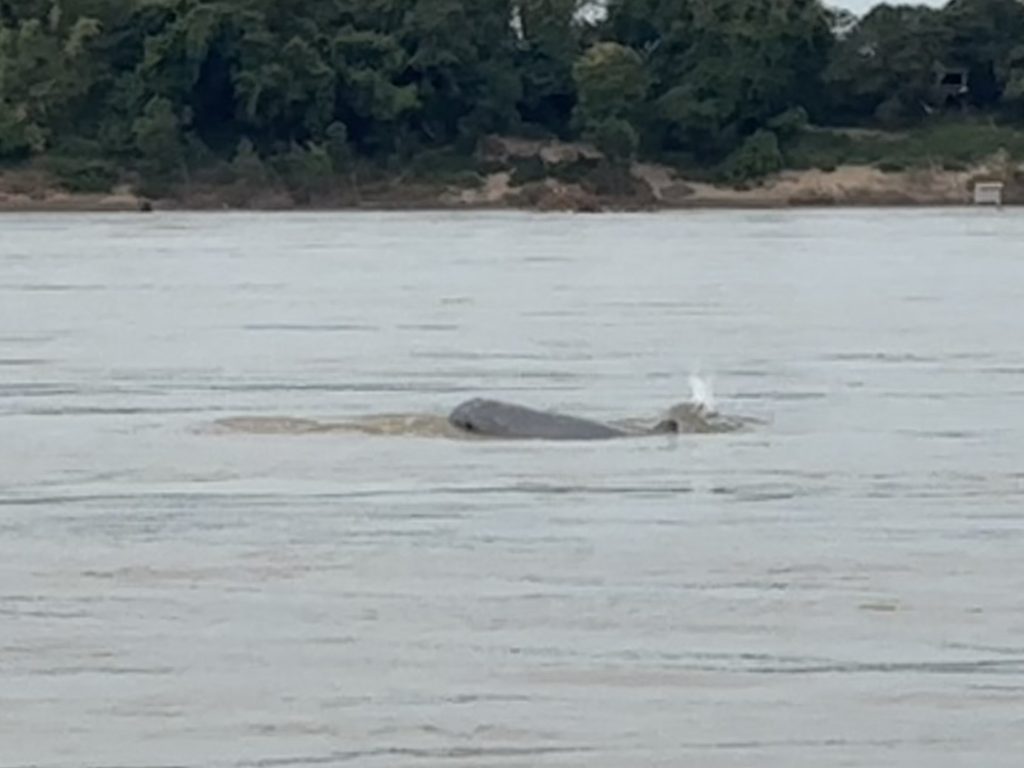
It’s 200km from the Laos/Cambodia border to Kratie, which I was expecting to be fairly small and compact. Instead, it was huge and sprawling, following the Mekong for miles with endless paddy fields. There was a noticeable drop in quality of life, with 70% of the population below the poverty line of $2 a day, eking out a subsistence through agriculture and/or fishing. We are staying at the Relais de Chhlong, a converted French colonial house that has a lot of character. After being woken annoyingly early by the resident cocks crowing, we head upriver in search of Irrawaddy dolphins. There are plenty of them, about 30 in this local pod, and although they are not in full leap-out-of-the-air mode, we get quite a few glimpses of their squashed dome-like heads breaching the waterline.
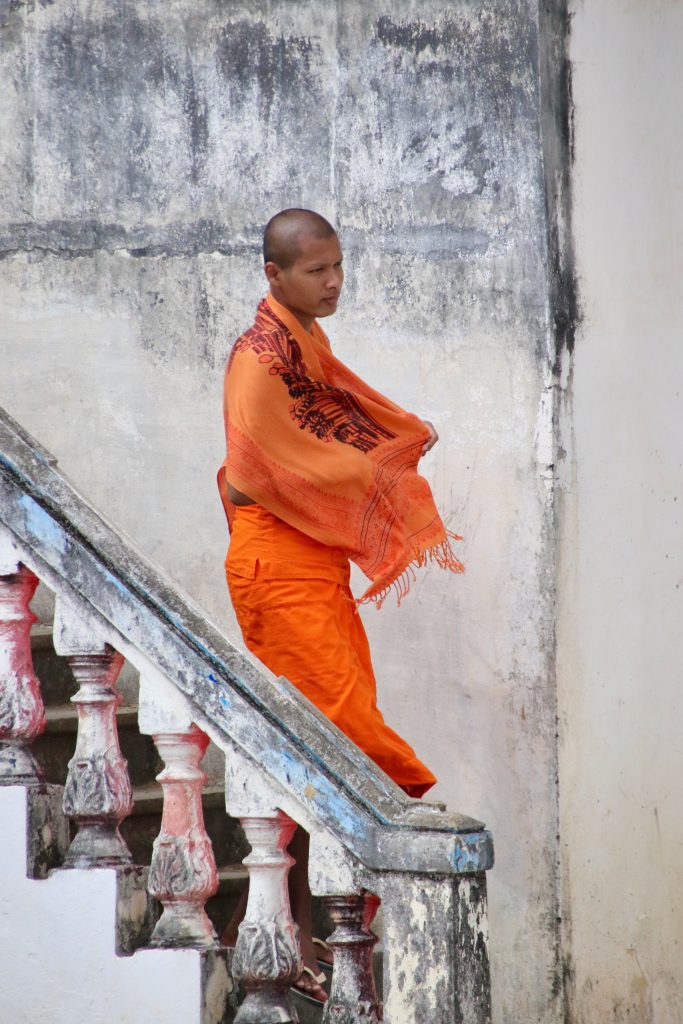
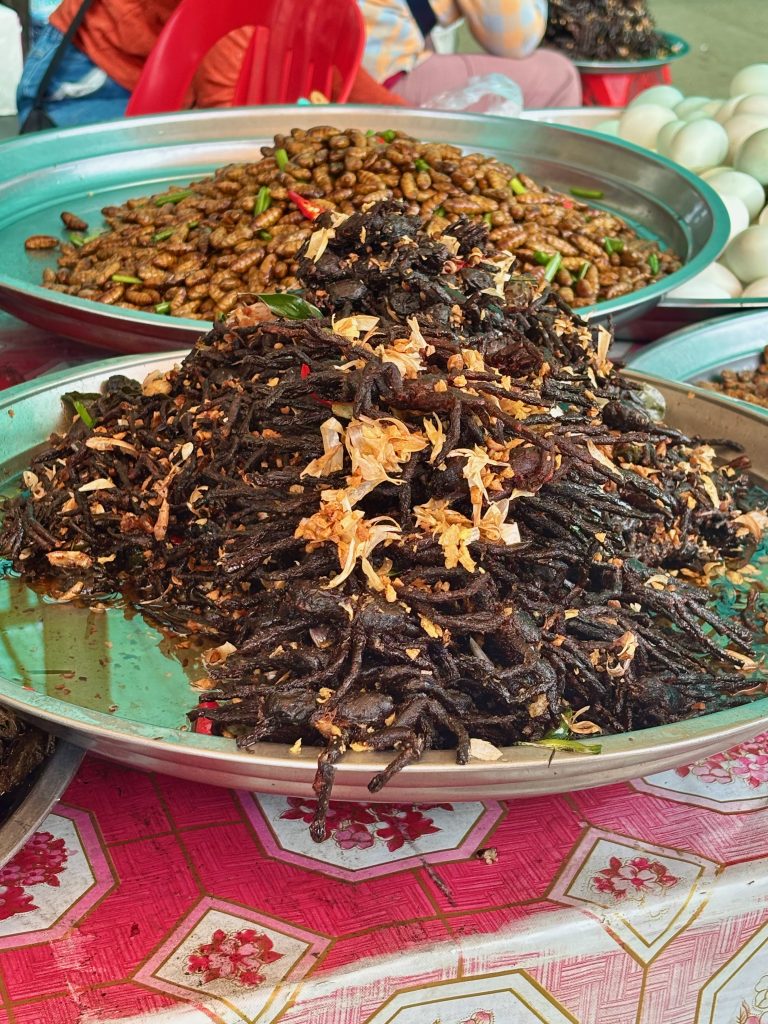
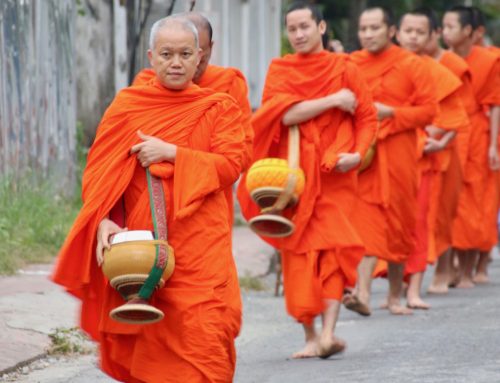
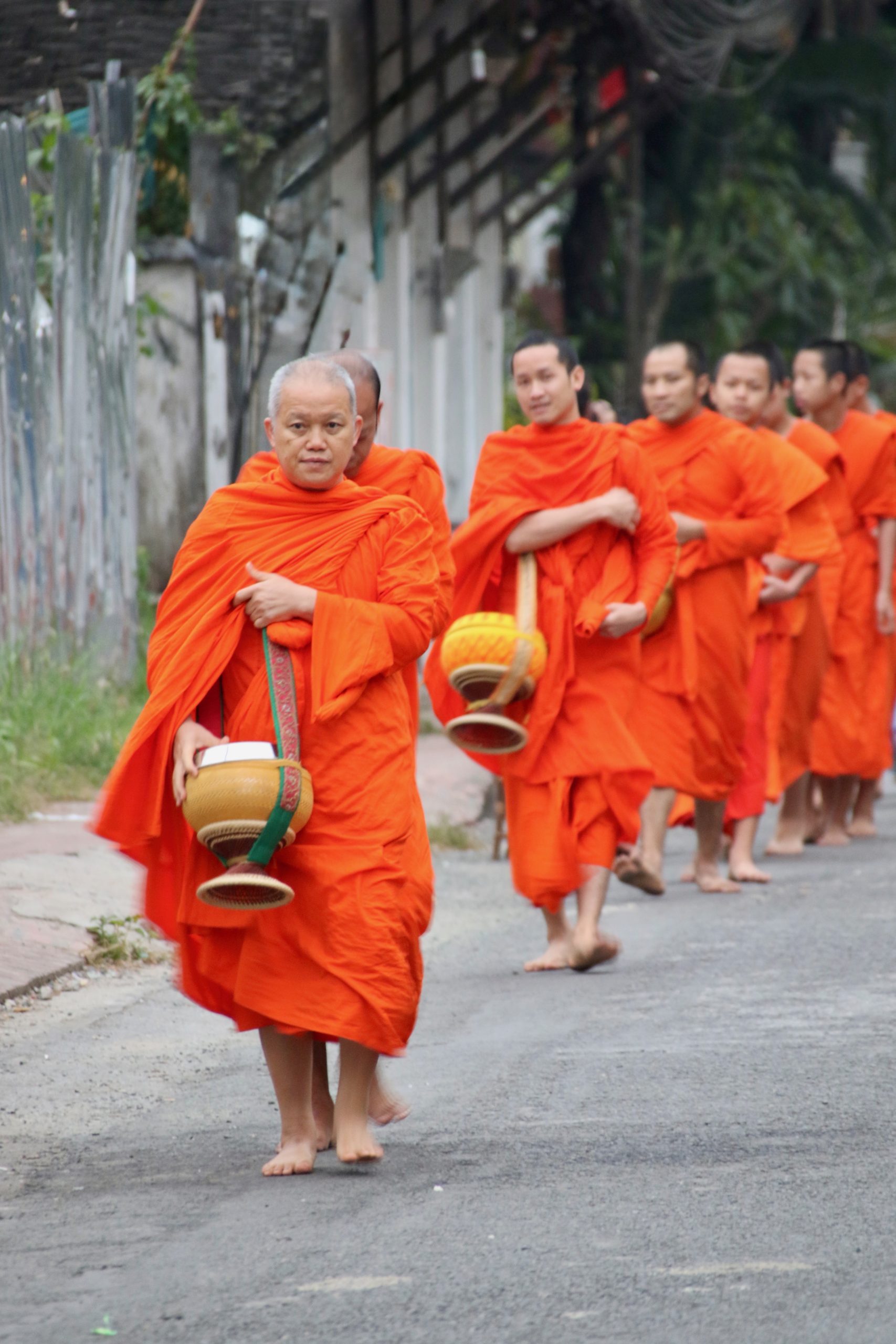
Our next stop is the 100-pillar pagoda at Wat Sarsar Mouy Rouy in Sambour town. There is an extensive legend about the 100 pillars – 23 burned when struck by lightning and the rest were stolen so now it’s made of concrete. There are plenty of monks in evidence, and it’s good to see them doing their thing naturally rather than the somewhat contrived experience in Luang Prabang. The following day we are off to see the capital Phnom Penh, which is billed as 5 hours away but only takes three and a half. We drive through a range of farming types – rubber, cassava, cashew, mango, lotus plant, rice, buffalo and duck and fish farms. Through Kompong Chan and taking a bizarre pitstop at Skoun, known locally as spider town. During the troubles when everyone was starving, this resourceful community developed novel ways of feeding themselves, including tarantulas, crickets and silkworms. Being offered a platter full of fried tarantulas the size of your hand is a bit strange, and many of the kids run around proudly showing you live ones.
We push on to Phnom Penh and arrive at the very posh Raffles Hotel Le Royal. Here it is high rise and bustling, with a population of 3 million. Time to relax before the mental assault in store tomorrow, including the killing fields and other exploits of the Khmer Rouge. A travel blog is hardly the place to provide deep analysis of something as harrowing as the genocide perpetrated by the Khmer Rouge, but we will always go to places such as Auschwitz and Hiroshima to understand as much as we can. Tol Sleng is a former high school that the Khmer Rouge turned into an interrogation centre. 17,000 went in and only 7 adults came out, plus 4 children. The rest were killed and dumped in mass graves. This revolution movement was borne out of political idealism driven by communism, pushed and organized by educated intellectuals and senior people, the Vietnamese, Chinese and so on, including of course Pol Pot who had many aliases, with this one apparently shorthand for political potential.
Their masterplan involved a year zero in which anyone intellectual or senior was removed from society. They took over Phnom Penh and told the inhabitants that they needed to leave for three days because the Americans were about bomb it, which was a lie. They kept meticulous records, so maps and photographs chronicle all the crimes. There were over 20 pre-planned prisons and so far around 100 mass graves have been found. They killed babies by whacking them against trees. They used every torture technique you can imagine, plus many you can’t. And the outcome? Only 5 senior members of the Khmer Rouge were prosecuted and the rest got away with it. Many remain in government. Estimates suggest that over 2.5 million died, which is around half the population, all in the space of 4 years. Enough on that subject.
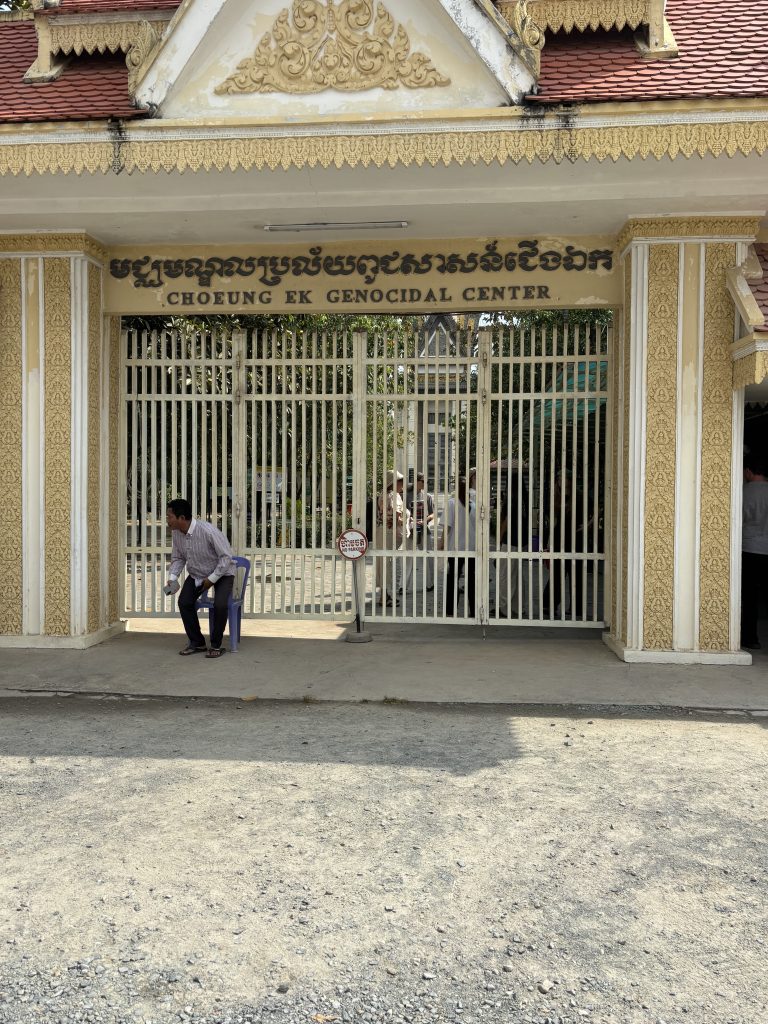
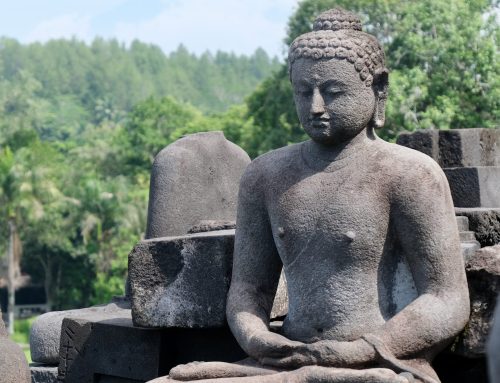
After the shock of all that, we also visit the killing fields of Choeung Ek to pay our respects at a moving monument – a stupa full of exhumed skulls. After this moral overload, it was good to finish the day on a lighter note by visiting the National Museum, which is crammed with buddhas of every shape and size, and take a tour round the immaculate Royal Palace which is also crammed with buddhas and other artefacts, most of them gold. The following day we drive to Battambang which takes somewhat longer than necessary due to our guides getting lost. The temples of Udong are not worth visiting, and a detour to examine some pottery workshops proved equally pointless.
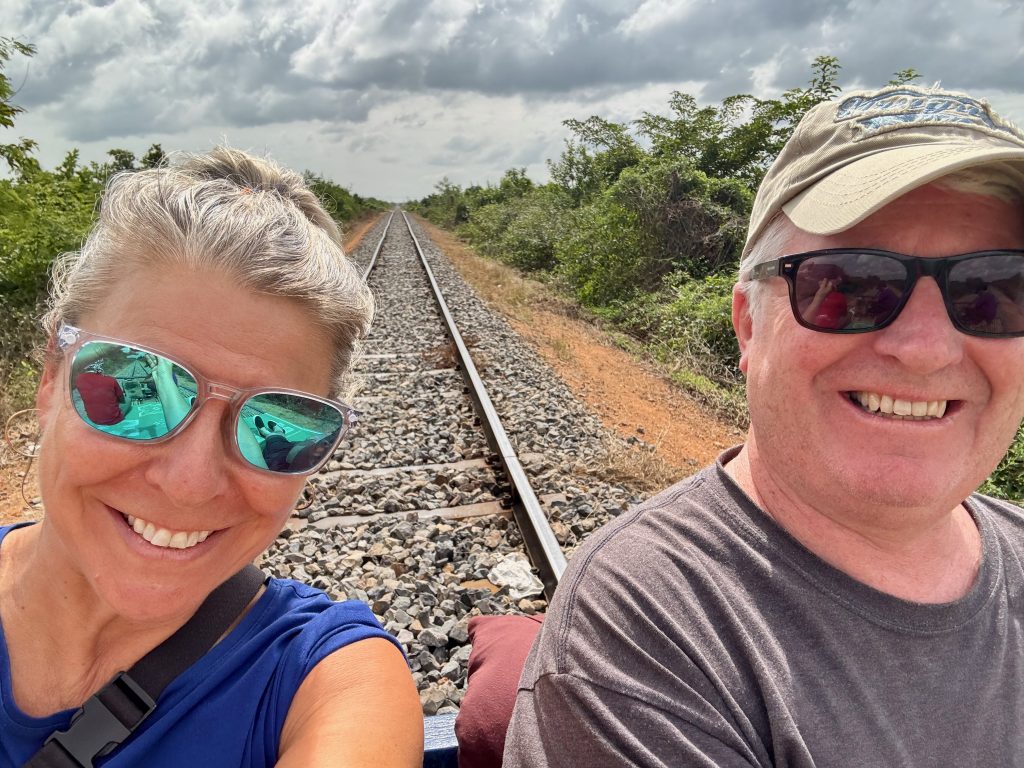
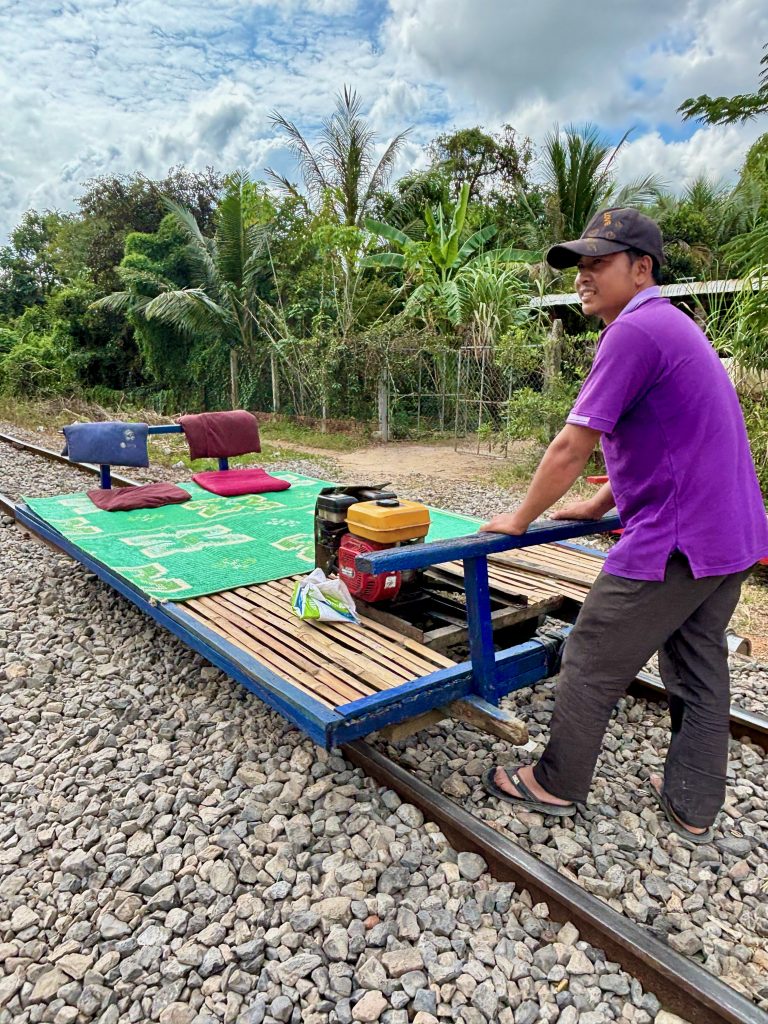
We check in to La Villa Hotel in town on the river, where our room is a knackered but charming French Colonial room bigger than our entire house. The next day there are two wonderful things to do – climb up the 300+ stairs to Wat Banau Temple which is an 11th century forerunner of Angkor Wat, and then ride the bamboo train for a boneshaking experience through the countryside. The first is a calm, contemplative experience preceded by a robust climb, and the latter is a testament to post-war frugal innovation. Old axles and car wheel hubs are rested on an old railway track, with a wooden platform on top and a small motor, and off you go. It’s similar to having a staple gun hit your arse every 3 seconds, but it’s great fun and a superb way to see the countryside instead of endless roadside shophouses, which become quite repetitive after a while. In the evening, I head to Phnom Sampeau to watch millions of bats emerge from a cave at sunset. Locals claim there are 6 million of them. It’s a slightly odd experience – the first time I have done this in an urban street. It’s a pleasant enough experience despite the unnatural setting, although the presence of street lighting right next to the entrance makes viewing and photography somewhat difficult.
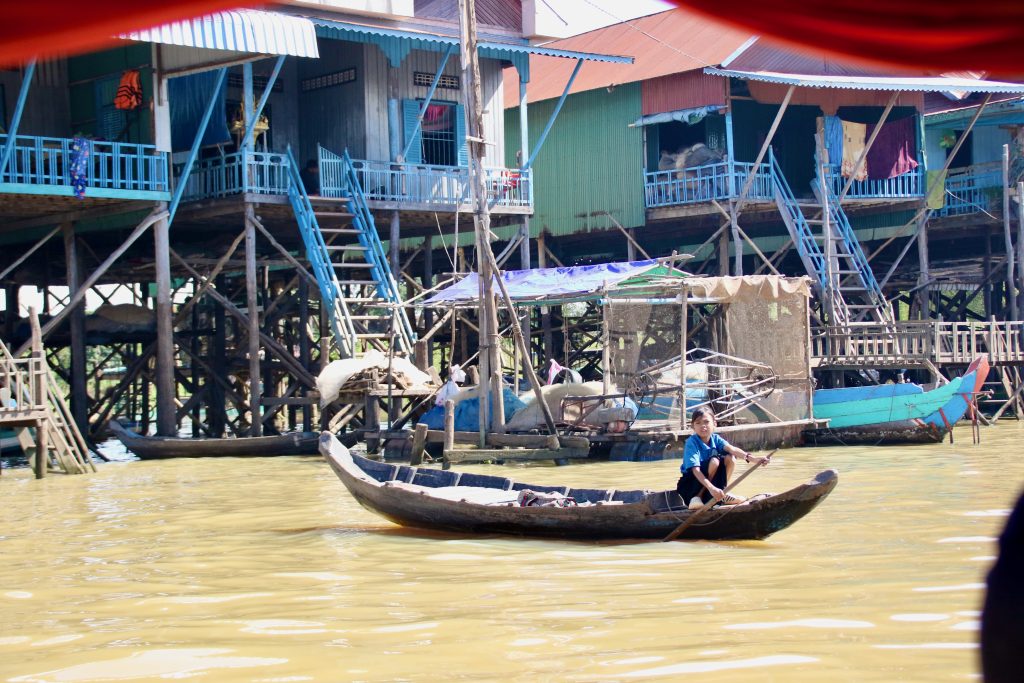
The next day we drive from Battambang to Siem Reap. The landscape changes to huge swathes of flat agricultural land as we approach Tonle Lake – the largest body of fresh water in Southeast Asia. In the rainy season the Mekong rises dramatically and its waters flood into the Tonle Sap River, reversing its flow back north-west into the great lake. At this point the lake balloons to more than six times its size from 2500 sq km to 15,000. This fluctuation is explained when we visit (by boat) the floating village of Kompong Pluk where the houses stand on stilts as high as 7 metres above the water.
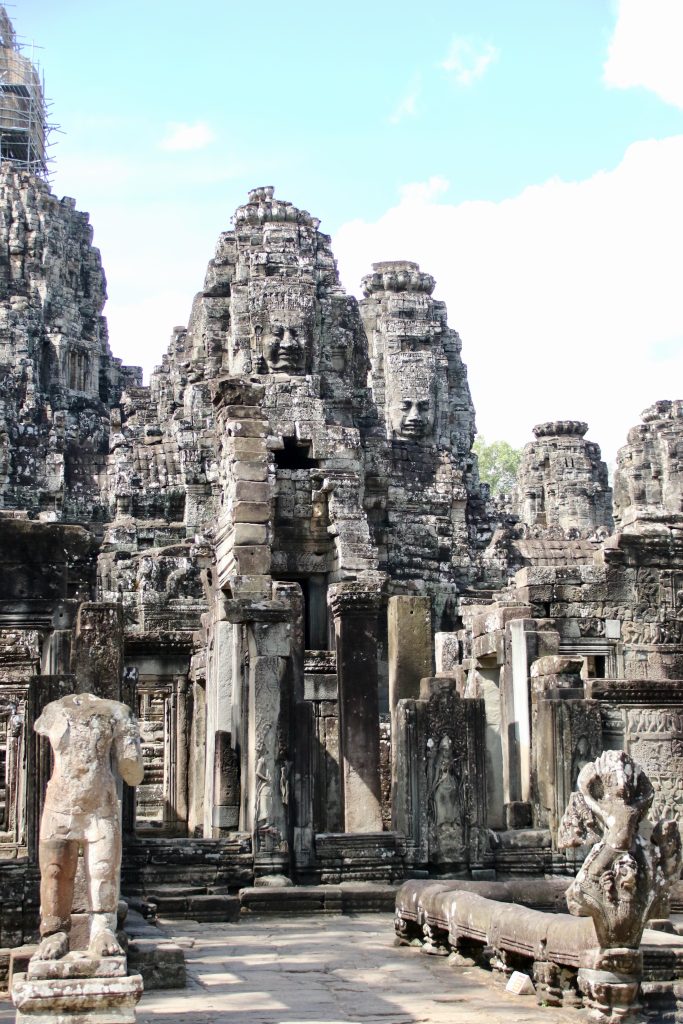
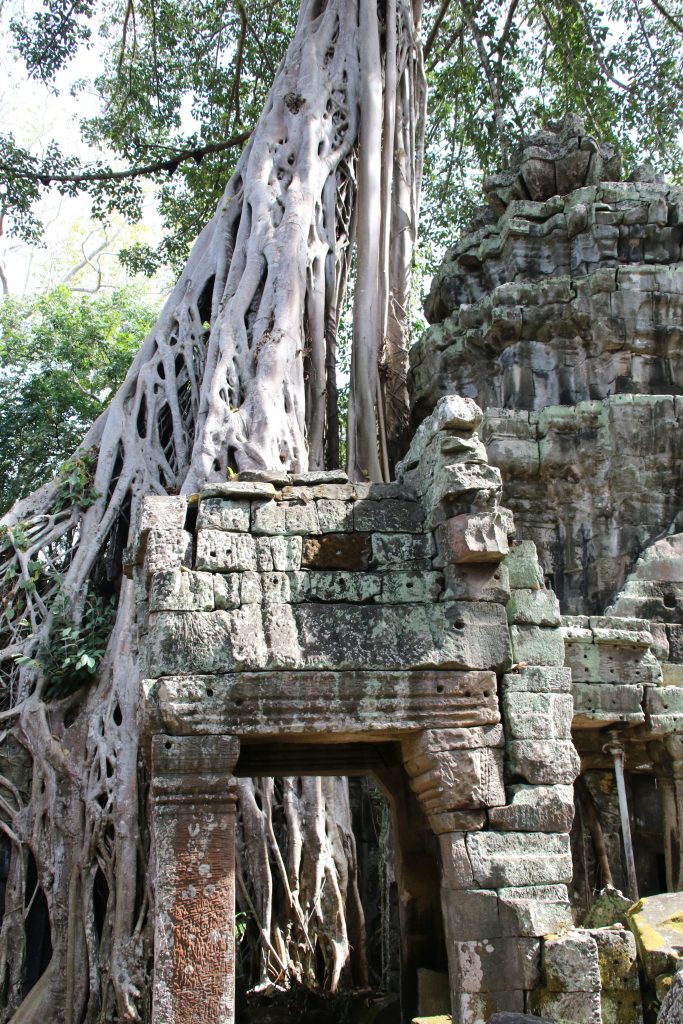
Of course, the main draw here is Angkor Wat, and it’s a very pleasant day climbing up and down the main temple, looking at the intricate bas-reliefs, examining the masonry skills and the sheer scale of it all. Walk through a sequence of enormous lakes, pleasant woodland, and visit Angkor Thom with its charming series of towers featuring smiling faces on all four sides, and Ta Prohm, famous for the tentacle-like tree roots that appear to be strangling the stonework. Although this could potentially be the most atmospheric of temples, it actually has the worst atmosphere simply because it featured in the Tomb Raider film, so it is blighted by gangs of hollering Chinese and starry-eyed couples inappropriately being photographed snogging in front of the entrance.
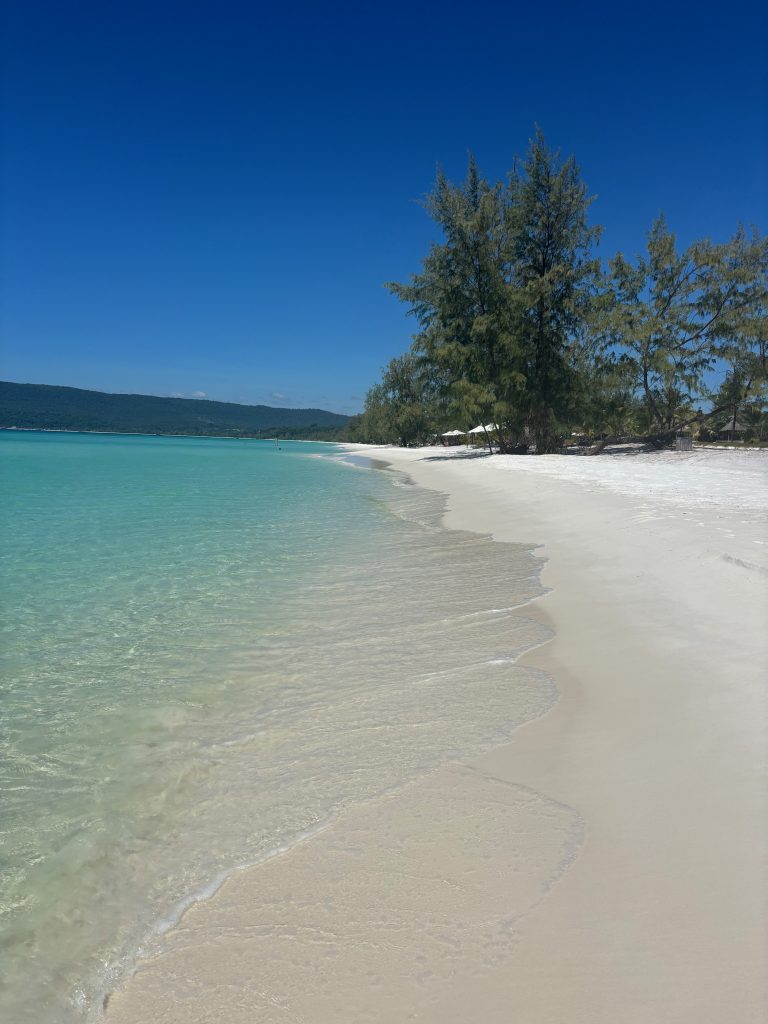
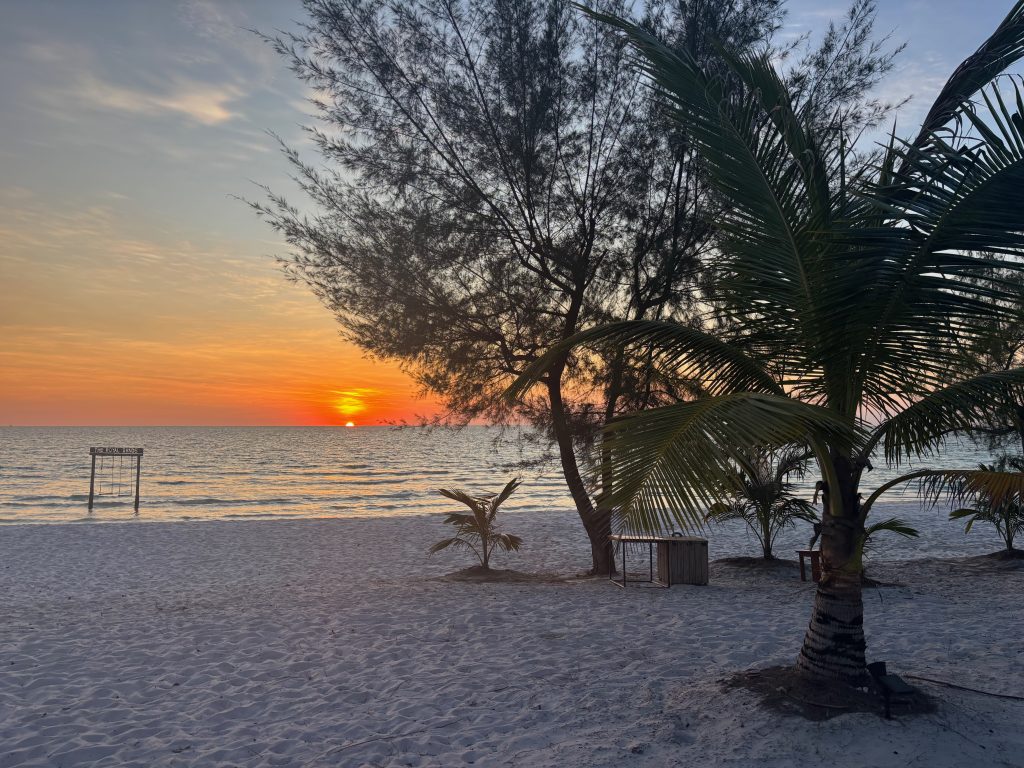
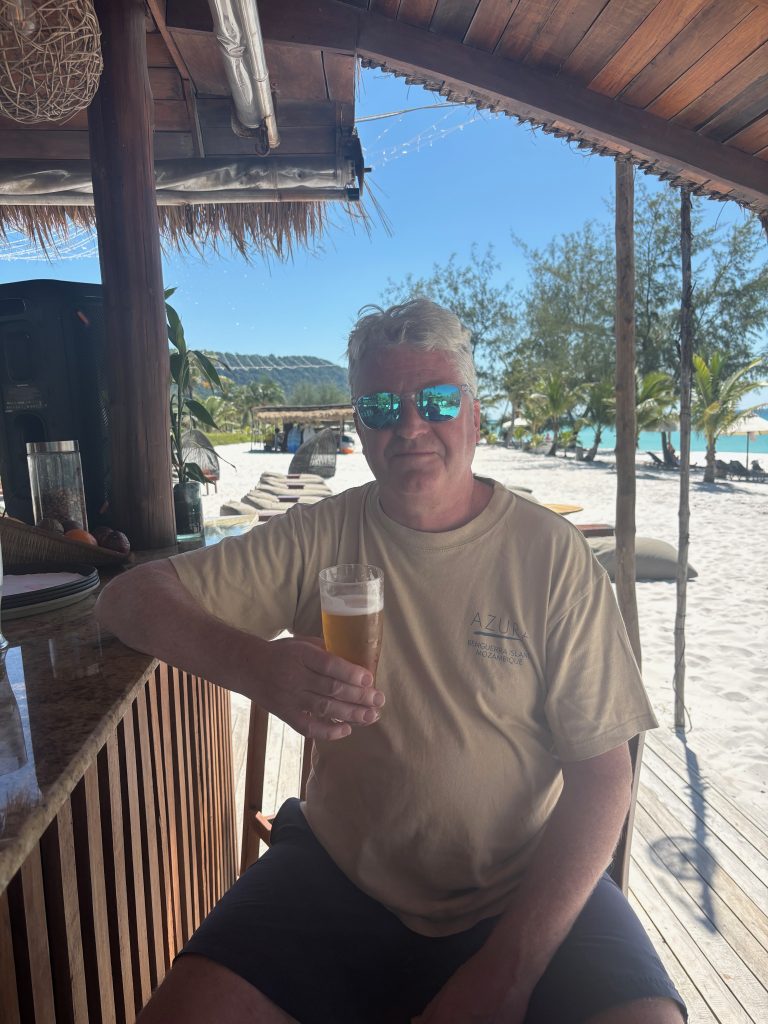
Time to move on the final part of our trip, taking a short flight from Siem Reap to Sihanoukville, which turns out to be an unpleasant industrial and shipping hub. Here we board our boat to The Royal Sands, a high-quality series of villas on the island of Koh Rong. After an anticipatory 50-minute trip we round the headland to witness the huge stretch of white sand that is aptly named Long Beach. Several luxury days follow before we do it all in reverse to return to FCC Angkor in Siem Reap to head home.
Concluding remarks on Cambodia. The country is interesting in pretty much every respect – landscape, culture, religion and history. Since it was the hugely expansive Khmer Empire in the 11th/12th century it has taken significant hits from almost everyone else – the aggressive Siam (now Thailand), the Chinese, Vietnam and intense communist influence often backed by Russia. With 70% of the population working as farmers or fishermen and scraping by on income of $2 a day, their resilience is remarkable. Rough working figures suggest that over 2.5 million of them were executed or starved to death in the Khmer Rouge atrocities, pretty much halving the population. It’s been a tough brief and they still need a lot of help. Highly recommended. 9 out of 10.

Leave A Comment